No field service product. Our anchor customer's dispatchers planned the day outside the platform, and nothing in it showed a technician's whole day, time off and SLA risk on one screen.
A live dispatch console in five months with a team of 15: every technician, every appointment, time off and SLA risk in one view. $1.5M TCV signed.
The dispatch console
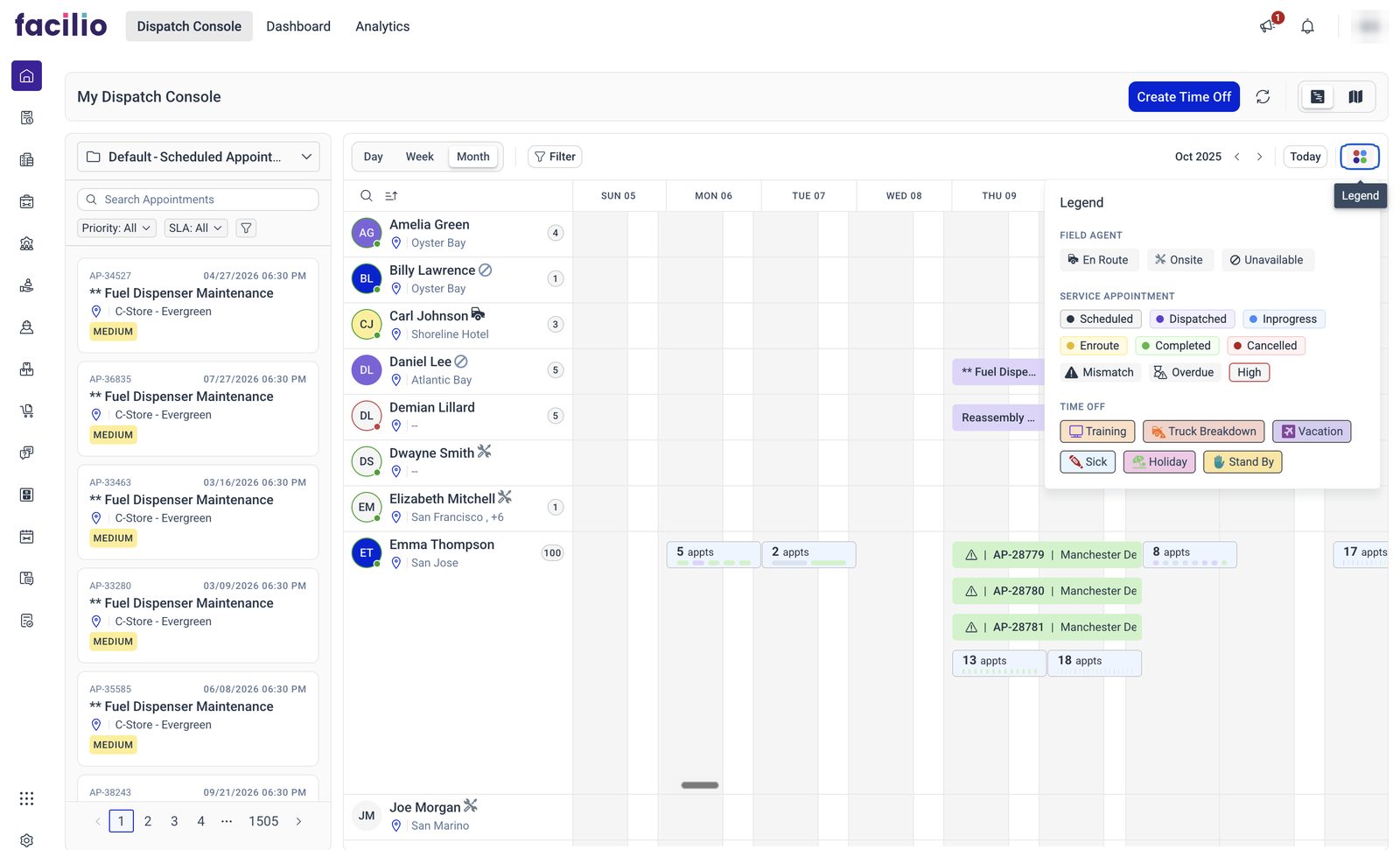
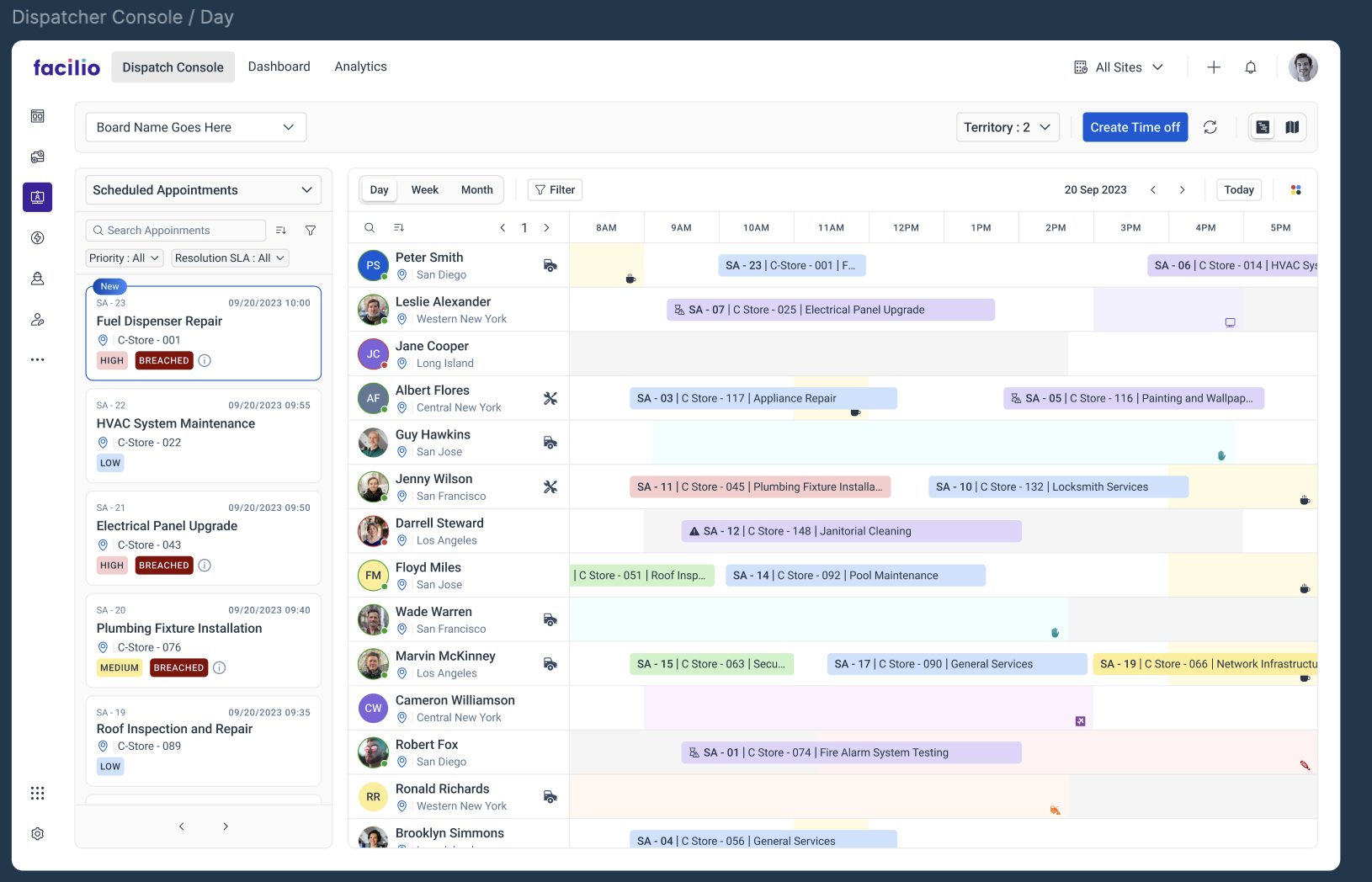
The heart of it is the dispatch console: every technician, every appointment, live status, time off and SLA risk in one view, with a map for where everyone is right now.
A customer wanted the system to pick the right technician for every job. There was pressure to say yes. I said no: their own dispatcher and workload data showed the volume was small enough to manage, and our product wasn't ready to do it well. Nothing was promised. When AI made it much cheaper to build, we built a dispatcher agent, now in a pilot with Berkeley. We also skipped multi-crew jobs in v1, because our first customers sent one person per job.
Who it serves
- Dispatcher: plans the day, reacts when a truck breaks down or a job overruns.
- Technician: sees the next job, goes en route, works on site, completes.
- Service manager: watches SLAs, overdue jobs and mismatches.
- Customer: wants the visit confirmed and the job done the first time.
Design choices
- One legend for everything: appointment status, technician status and time off types all read at a glance.
- Time off is first class (training, sick, vacation, truck breakdown, stand-by), because a dispatcher plans around people, not slots.
- Unassigned work sits on the left with priority and SLA breach badges, so the urgent job is the first thing you see.
- Pricing set separately for each segment, because a retail chain and an FM company count value differently.
Built next to the customer
I flew to the US and sat with the anchor customer's dispatchers and managers to see how a day really runs. The product was shaped there, around their day, not around our modules.
What I'd do differently
Launch it properly. We never ran outbound or a real launch, so the pipeline was inbound only. Good product, quiet market.